Meet the people behind the posts.
Crypto and AI, through investigations, research, working products and culture. Get to know the person, open a useful piece of their work and follow the subjects that interest you.
Topic reading lists explain why an author is useful and suggest a first material.

Find someone to read
173 profiles, with original work and projects to explore.
12 people found · Clear filters
-

Explains how language models change software development, from his original description of vibe coding to experiments where an agent changes training code and measures the result.
Explore their work -

Created Keras and ARC, and examines how to distinguish learned task performance from the ability to solve unfamiliar problems.
Explore their work -

Blockchain and AI design, from coauthored machine-learning papers to NEAR's approach to programmable money.
Explore their work -

Coauthored research on prompting models to produce intermediate reasoning steps and on testing whether short factual answers are correct.
Explore their work -

Connects reasoning and reinforcement learning methods to their failure modes, including models that improve an evaluator's score without completing the intended task.
Explore their work -
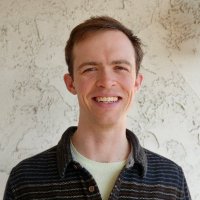
Nathan Lambert
Post-training researcher; co-founder and executive director of Trillium Labs
@natolambert
Explains how training examples, preference comparisons and verifiable rewards turn a pretrained language model into a more useful assistant.
Explore their work -

Researches reasoning, reinforcement learning and multi-agent systems, with earlier coauthored work on poker search and language-guided negotiation.
Explore their work -

Makes model research inspectable through annotated code and training reports, from a Transformer implementation to the training and evaluation of a coding model.
Explore their work -

Explains language models through small implementations, connecting tokens and attention to the code for building, training and adapting a GPT-style model.
Explore their work -

Studies how model behavior develops during training, using public checkpoints and controlled experiments on memorization and capabilities.
Explore their work -

Connects open model research and software to questions about what an AI benchmark measures, with work on model compression and scientific reasoning.
Explore their work -
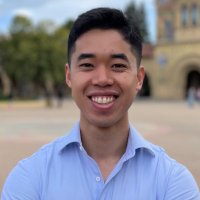
Studies how model algorithms and GPU hardware fit together, with coauthored explanations of faster attention and alternatives to a growing attention cache.
Explore their work